
Media
HKU Photonics Team Develops an Axially Encoded Strategy for Breaking the Microscopy Speed Bottleneck
25 May 2026
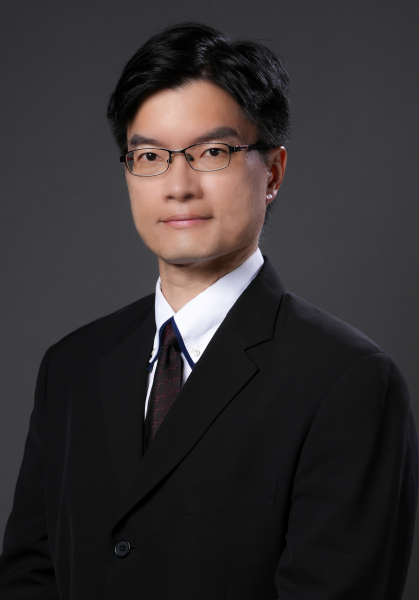
Professor Kenneth Wong
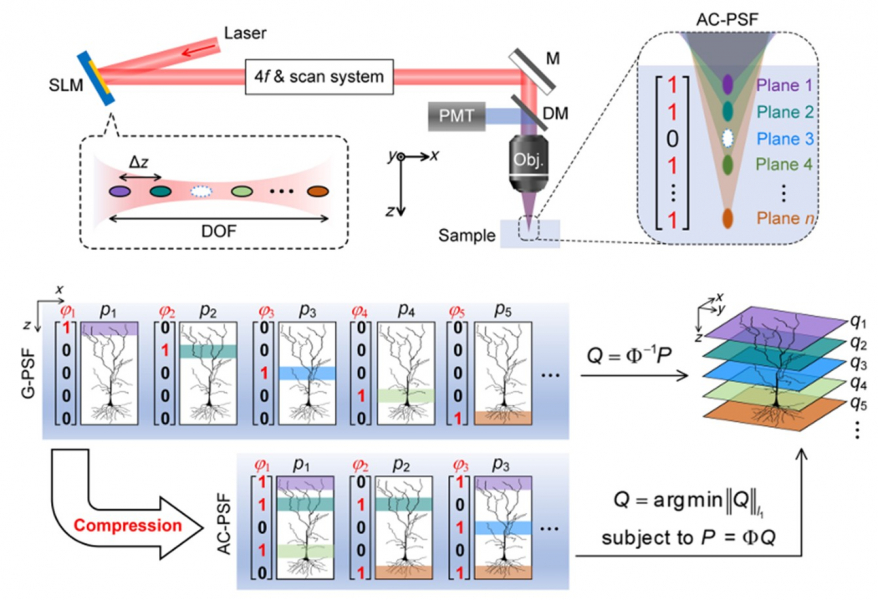
Powered by the Arbitrary Illumination Microscopy with Encoded Depth (AIMED) technique, axial encoding enables simultaneous multiplexing of multiple depth layers, allowing volumetric information to be reconstructed from substantially fewer scans through the joint use of structured illumination and compressive sensing.
A research team from HKU Engineering has pioneered a fundamentally new imaging strategy known as AIMED (Arbitrary illumination microscopy with encoded depth), which utilizes a sub-sampling approach. By integrating innovations in axial optical encoding with advanced computational image reconstruction, the AIMED technology enables a substantial increase in 3D imaging speed while enhancing photon safety, all with minimal additional system complexity. This breakthrough demonstrates significant advantages across efficiency, image quality, and system compatibility.
This work was conducted by the OMEGA laboratory under the leadership of Professor Kenneth K. Y. Wong of the Department of Electrical and Computer Engineering at the University of Hong Kong (HKU).
Axially Encoded Strategy Overcomes Multiphoton Microscopy Speed Challenge
Multiphoton microscopy (MPM) is a cornerstone technique for deep-tissue three-dimensional imaging in life sciences, playing an indispensable role in in-vivo studies of neuronal structures, vascular networks, and functional dynamics. However, acquiring a full 3D volume with conventional MPM suffers from low imaging efficiency and high cumulative light exposure, significantly limiting its applicability to fast biological dynamics and long-term observations.
The core concept of AIMED departs from the conventional paradigm of plane-by-plane scanning. Instead, it employs axially structured illumination to simultaneously excite multiple depth layers within a single exposure, followed by computational reconstruction based on compressive sensing principles.
On the optical side, the research team uses a spatial light modulator (SLM) to load designed phase masks that split an incident laser beam into multiple controllable focal spots along the propagation direction. Moreover, the relative intensity of each focal spot can be independently adjusted to compensate for depth-dependent attenuation or signal imbalance.
When interacting with the sample, the nonlinear nature of two-photon or three-photon excitation naturally suppresses inter-plane crosstalk, enhancing the independence of the encoded layers. On the imaging side, instead of sequential axial scanning, only a limited number of encoded illuminations are required. Depth-resolved fluorescence signals are then recovered using sparse optimization algorithms, enabling full 3D reconstruction from compressed measurements.
High-Quality Imaging Validated in Mouse Brain
Axial-coded point spread function measurements under different encoding schemes demonstrate precise axial control and good intensity uniformity across multiple planes. In a five-plane configuration, the lateral resolution remains around 600 nm, while the axial resolution ranges from 2 to 4 mm, indicating that high-quality optical focusing is preserved even under simultaneous multilayer excitation.
AIMED was further evaluated in imaging experiments on mouse brain neuronal samples. Compared with conventional plane-by-plane scanning, AIMED successfully resolved fine neuronal substructures, including dendrites and axons, under a compression ratio of approximately 60%, while using only one-half to one-third of the per-plane optical power. In some encoding configurations, the reconstructed images even exhibit enhanced contrast.
For particularly delicate structures such as dendritic spines, AIMED consistently delivers reconstruction fidelity comparable to or better than traditional high-power sequential scanning.
Across compression ratios ranging from 62.5% to 87.5%, the reconstructed 3D images maintain a structural similarity index of approximately 0.95 and a peak signal-to-noise ratio of 41-42 dB, showing negligible degradation compared with fully sampled volumetric scans.
Further simulation studies indicate that, in large-scale volumetric tasks involving up to 47 axial planes, AIMED can achieve an approximately eightfold increase in acquisition speed, highlighting its strong scalability and potential for high-throughput volumetric imaging.
Technical Advantages and Future Perspectives
The paradigm embodied by AIMED, axial optical encoding combined with sparse reconstruction, provides a plug-in, flexible, and efficient solution for 3D multiphoton imaging. Unlike hardware-intensive acceleration strategies, AIMED does not rely on expensive components or major system reconfiguration. Instead, it leverages programmable light-field engineering together with a mature compressive sensing framework to improve imaging speed while preserving image fidelity and system stability.
This approach is particularly well suited for sparse biological structures such as neuronal networks and is inherently favorable for phototoxicity-sensitive samples. Looking ahead, the principles and framework of AIMED are readily transferable to other three-dimensional optical imaging modalities, including confocal microscopy, Raman imaging, and photoacoustic imaging.
By enabling faster, deeper, and longer-term volumetric imaging, AIMED also lays a foundation for future integration with data-driven and deep-learning-based intelligent imaging strategies.
The research findings have been published in the top international journal Advanced Photonics, in a paper titled "Multiplane compressive imaging with axial-coded multiphoton microscopy."
Link to the research paper: https://doi.org/10.1117/1.AP.7.4.046010
About Professor Kenneth Wong
Professor Kenneth K. Y. Wong is a professor and former Head of the Department of Electrical and Computer Engineering at the University of Hong Kong. He has received numerous awards, including the Best Teacher Award (2005-06), Outstanding Young Researcher (2008-09), and Outstanding Research Student Supervisor (2018-19). He is an Associate Editor of Optica and has served on the Publications Committee of SPIE, as well as an editor for IEEE Photonics Technology Letters and Optics Express. A senior IEEE member and recent SPIE and Optica Fellow, he also co-taught a course at MIT during the 2009-10 academic year and is the former Chair of the IEEE Hong Kong Section.
Media Enquiries
Faculty of Engineering, HKU
Ms Christina Chung (Tel: 3910 3324; Email: chungmc@hku.hk)
Ms Natalie Yuen (Tel: 3917 1924; Email: natyuen@hku.hk)
 Facebook
  HKU IOS App
  HKU Android App
  Social Media and Apps